



Futsal Elite
What is the Futsal Elite Program?
Futsal Elite is an 11-week advanced training program designed to help players sharpen their technical ability, speed of play, and overall game intelligence.
Led by professional coaches Luis Paiva and Kupono Low, sessions take place in a fast-paced, high-touch environment where players are constantly challenged to think quicker, play faster, and perform under pressure.
Training focuses on ball mastery, decision-making, and creativity in tight spaces—skills that translate directly to the outdoor game. Players build confidence, improve control, and develop habits that carry into real match situations.
Built for players who are serious about improving, Futsal Elite provides consistent, high-level training throughout the summer to help athletes gain an edge and carry that performance into the next season.
Futsal Juniors (Ages 5-7)
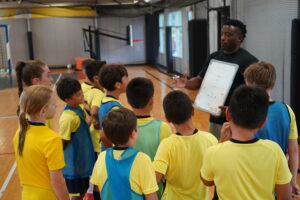 Our Futsal Elite Juniors introduces young players to futsal in an engaging and supportive setting. The focus is on coordination, confidence, and technical fundamentals, giving players the foundation to develop their skills and understanding of the game. Sessions are designed to build confidence through fun, purposeful training, guided by our professional coaching staff.
For players ages 5-7, training takes place on Sundays from 2:00 – 3:00 PM.
Futsal Elite (U8 – U15)
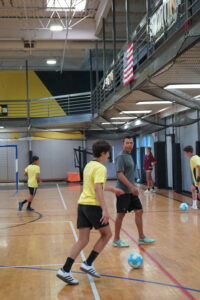 This Summer Futsal Elite session runs as an 11-week, training-only program, offering a consistent, high-level environment for focused development. Sessions are built around game-realistic situations that challenge players to think quickly, stay composed, and execute with precision under pressure.
This training cycle reflects a broader vision of developing a program built for consistent futsal tournament play and regional-level competition.
Age Groups & Training Times:
U8 – U10 Girls: 3:00 – 4:15 PM
U8 – U10 Boys: 4:15 – 5:30 PM
U11 – U12 Boys & Girls: 5:30 – 6:45 PM
U13 – U15 Boys & Girls: 6:45 – 8:00 PM
SportHQ Leagues and Tournaments

SportHQ is the host to Cary’s own Youth Soccer and Futsal Leagues
We also host 3v3, 4v4, and 5v5 tournaments throughout the year. We attract teams from all over North Carolina and beyond to compete in our competitive tournaments. Please check the site periodically for information and registration into our Leagues and tournaments.